
Association for Research, Support and Protection of Karst Landscapes
Festival Krasopis
Karst mountains inspire artists, scientists and anyone who loves to dive into landscape. We are very happy to introduce people to the Croatian festival scene who found a way to get into dialogue with nature through their creation, their work or just their curiosity. During the festival we will speak with musicians, visual artists, poets, karstologists, speleologists and people who research the mythology of karst regions.
We'll present many perspectives on the mountains. How does Karst sound? What is it telling? How does it look like? What can we know about it? Join us on this research journey, we would appreciate it!
It's important to notice that the Karst is one of the most complex and diverse landscapes and ecological structures, and that it is, because of the leading - and mostly stereotypical - narratives not that visible.
On this site and live at the festival we will present up-to-date scientific Karst perspectives (dolines, caves...). A small group of activists will show us how environmental activism can artistically or politically or work on the protection of rivers.
The idea of the gathering is to bring our participants together in conversations and exchange of experiences to give space to complement each other for a new image of a world that could be less reductionist than the existing one.
Powered by:


Participants 2026

Ivo Lučić
Ivo Lučić is a karstologist whose field of interest is wide as the Dinaric Karst, but not as deep as the Dinaric Karst. He brings things together. In books, research reports and his journalistic work he investigates how nature science and traditional and practical ideas show a contemporary image of the Karst. He describes his perspective as karstological holistics or environmental humansitics. His expertise and his critical view of human intervention in the Karst will enrich artistic impulses and give us the necessary grounding for the subject.

Aida Kapetanović
Aida Kapetanović was born in Mostar and grew up in Italy, where she studied Political Science and Sociology in Florence. She is a member of the "Fondacija Atelje za drustvene promjene – ACT" (Foundation Atelier for Social Change - ACT). Her particular areas of interest are eco-sociology and the cultural dimensions of environmental movements.
For her doctoral dissertation, she researched activism related to the protection of rivers in Bosnia and Herzegovina, examining how collective movements come together in networks, how they form identities, and what kinds of culture and symbolism emerge in the process.
A particular focus of her work is on the rivers of Southeast Europe. She has now returned to Mostar, where she puts her knowledge, experience, and commitment into practice locally.

Mladen Blažević
Mladen Blažević (b. 1969 in Rijeka) is a Croatian writer, poet, playwright, and journalist, widely known both for his literary work and his journalism.
At the Krasopis Festival, he will present "The Arrhythmia of the Earth", a novel about a cave in Istria where an archaeologist uncovers previously unknown layers. Through parallel narrative strands, he delves into the different dimensions of time that have left their traces in the cave, each layer revealing a different era.
An entertaining, thrilling, and deeply knowledgeable journey through time awaits us with the author, who today lives and works in Vižinada, Istria, not far from caves shaped by the Karst landscape.

Matko Kezele
Matko Kezele will create the visual identity of this year’s festival. Kezele is a mosaic artist and conservator who trained in his craft at the renowned Scuola mosaicisti del Friuli in Spilimbergo, Italy
Over time, he has developed a distinctive artistic language of his own, creating mosaics that he sometimes applies directly onto pieces of Karst stone. The Karst — its colours and forms, and the particular magic of this landscape and the culture connected to it — is the central inspiration for his work.
His art is nature in a thousand pieces: living, colourful, archaic, and a deeply familiar stone.
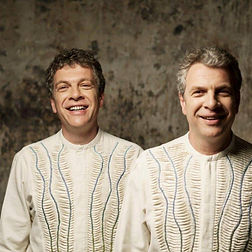
Ratko & Radiša Teofilović
If the Karst itself could sing, it would probably sound like the music of these two extraordinary twin brothers: archaic, mysterious, and at the same time modern — and entirely a cappella.
As surprising as the aesthetics of the Dinaric Karst can sometimes be, so too their music does not rely on the thirds so characteristic of European music, but instead unfolds in astonishing fifths and fourths. Beneath them there is often a sustained fundamental note, the ison, as if it were the primordial tone of that nature, spanning across centuries.
Their repertoire reaches as far as the Dinaric Karst itself: Kosovo, southern Serbia, Macedonia, Sandžak, and Dalmatia.
The music of these two artists is an event, and we are proud and happy to have them with us at Krasopis!
Foto: Šibenski

Sanja Puljar D'Alessio
Sanja Puljar D’Alessio is a lecturer at the Faculty of Humanities and Social Sciences at the University of Rijeka, where she works in the Department of Cultural Studies. Her work focuses on cultural anthropology and ethnography, exploring how people, groups, and institutions shape their everyday lives and social worlds.
In her recent research, she has focused particularly on the relationship between humans and plants, exploring topics such as “more-than-human sociality,” cultural botany, and ecological issues.
How we live with plants — and how we should live with them — is a question she will help us explore and answer at the festival.

Predrag Slijepčević
Predrag B. Slijepčević is a bioscientist and Senior Lecturer in the Department of Life Sciences at Brunel University London, where his research lies at the intersection of biology, evolutionary science, and the philosophy of science.
At the heart of his work is the question of how biological systems — from bacteria to animals — perceive their environment, process information, and develop forms of biological intelligence.
In his book Biocivilisations: A New Look at the Science of Life, Slijepčević challenges the anthropocentric idea that humans represent the pinnacle of biological evolution.
Drawing on examples from bacteria, plants, fungi, insects, and animals, he shows that communication, cooperation, agriculture, medicine, architecture, and even forms of art are not exclusively human achievements.
He develops a perspective on life in which organisms are not seen as passive machines, but as active, learning, and interconnected agents.
Biocivilisations is thus both a scientific and philosophical invitation to rethink our place within the web of life.

Katarina Kušić
Katarina Kušić is an Associate Professor at the Center for Advanced Studies – Southeast Europe (CAS SEE) at the University of Rijeka, working in the fields of International Relations and Political Science. She explores how land, agriculture, conservation, and tourism are shaped politically and socially, particularly in Croatia and Serbia. She is also interested in the relationships between people and soil/earth. Her research project, among other things, examines the political ecology of land in Croatia and Serbia. At the festival, she will tell us how forests and mountains are perceived and narrated in political thought.

Hrvoje Jurić
Hrvoje Jurić is a professor of philosophy in Zagreb. His particular field of interest is bioethics. He is also co-editor of the journals Philosophical Research and Synthesis Philosophica. In addition, he writes poetry. His book Of the Least and the Even Lesser is a collection of poetic (!) essays about minorities or living beings whom we humans are quick to dismiss as insignificant — from refugees and animals to things and phenomena we are inclined to look down upon.
This year, he will introduce us to the work of Ivan Illich, who would have celebrated his 100th birthday this year. Ivan Illich (1926–2002) was an Austrian-American and globally renowned social philosopher, theologian, historian, and Catholic priest. He coined the concept of conviviality — a vision of a humane, self-determined society based on serving life rather than systems of domination, and on a thoughtful and careful approach to technology. His ideas remain remarkably relevant today.

Sofija Vrcelj
Sofija Vrcelj is a professor of education at the Faculty of Humanities and Social Sciences at the University of Rijeka, where she works in the Department of Education. Her teaching focuses primarily on three areas: school pedagogy, comparative education, and feminist pedagogy. Vrcelj understands pedagogy not merely as a theory of teaching, but examines education in relation to social change, gender relations, and institutions. For Krasopis, she will explore the work of the Austrian-American social philosopher Ivan Illich from a pedagogical perspective.
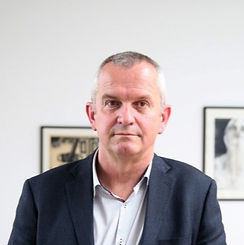
Goran Barović
Prof. Dr. Goran Barović from the University of Montenegro in Nikšić is a geographer and cartographer and a professor at the Faculty of Philosophy of the University of Montenegro. He has conducted research on hydrology and river networks in Montenegro, using GIS to analyse them. Astronomical and mathematical geography, as well as general and thematic cartography, are also among the subjects he teaches. He has also been active as a speleologist since his student days and knows the cave systems of Montenegro inside out.
At the festival, he will talk about the hydrography of the Zeta River.

Anne-Kathrin Godec
Anne-Kathrin Godec is a writer, poet and translator. Together with her husband she owns the literary hotel Balatura where she organized during the last 18 years reading events, conversations and festivals . But the whole time she is magically drawn to the nature in the environment surrounding her. As she grew up in the forests and walked on paths covered by fir needles in the Black Forest in Germany, the Dinaric Karst seemed a little alien to her at first. During her wanderings through nature she started to read the landscape with its own alphabet, slowly drew nearer to it and found a new world.

Andrej Stroj
Andrej Stroj is a hydrogeologist at the Croatian Geological Survey (Hrvatski geološki institut) in Zagreb. His particular area of expertise is not so much conventional groundwater hydrology as the hydrogeology of karst landscapes — that is, the study of how water flows through karstified rocks, caves, and underground channel systems. He investigates how precipitation enters karst areas, is stored underground, and eventually emerges again through springs. One of his main areas of research is the Dinaric Karst, particularly the Velebit region, the Gacka River, and the Croatian Adriatic coast. He also studies karst groundwater resources in terms of their use and protection, which is particularly important because karst groundwater can respond rapidly to environmental changes and pollution. For Krasopis, he will focus on the Lika region, which has recently attracted public attention due to a waste scandal.

Dženeta Hodžić
Dženeta Hodžić is a research associate at ISOE – Institute for Social-Ecological Research in Frankfurt. Her work lies at the intersection of environmental anthropology, ethnography, and water research.
She is particularly interested in groundwater and karst landscapes, focusing on how groundwater is used, managed, measured, and protected.
Water infrastructures and their relationship with society and the environment are also central to her research. For Krasopis, she will speak about the seemingly “unruly” underground waters of karst landscapes.

Krešimir Žganec
Krešimir Žganec is a biologist and ecologist and a professor at the University of Zadar. His research focuses on the ecology of freshwater ecosystems, particularly rivers, lakes, and the invertebrates that inhabit them.
He teaches river and freshwater ecology, including the study of the ecological quality of running waters. His particular interests include macroinvertebrates — small invertebrate animals that live on or in the bottom of aquatic environments and serve as important indicators of the health of a water body — as well as crustaceans and other aquatic organisms, including endemic species of the Dinaric region.

Sead Šašivarević
Sead Šašivarević is the founder and steward of “Obećana Zemlja” (OZ) in Blagaj near Mostar, Bosnia and Herzegovina. After 17 years in the financial sector, he left behind his urban and professional life and, together with his family, created a place that brings together permaculture, organic farming, a close connection with nature, and education. Obećana Zemlja also serves as a place of learning. One example is the “Knights of OZ” initiative, which aims to reconnect children more closely with soil, plants, and the natural world. Šašivarević is increasingly active in protecting the rivers and karst springs of Herzegovina. In 2026, among other initiatives, he launched a citizens’ initiative to protect the Bunica River after an infrastructure project raised questions about its potential impact on the river and groundwater.

Jan Röhnert
Jan Röhnert is a poet, essayist, translator, travel writer and literary scholar. He is a professor of modern and contemporary literature at the Technical University of Braunschweig and lives in Leipzig. His more recent publications include the poetry collection "Erdtagzeit" and the story collection "Karstwärts" (2024). His essay "Wildnisarbeit. Schreiben, Tun und Nature Writing" (Arco Verlag, 2025) understands wilderness not as a state but as a working concept for processes whose course can be neither planned nor predicted. In three parts, the book takes the reader to the last wastelands of Leipzig, to the Elbe river meadows in the Wendland, and to an orchard slope in East Thuringia above an overgrown sandstone quarry.
Krasopis 2026: Program
Friday, 23.10.26
Location: Seminar house, Hotel Village Balatura
17:00
Matko Kezele
Opening of the exhibition: "Pieces of Landscape"
Participants: Matko Kezele, Anne-Kathrin Godec, Ivo Lučić
Subject: Life and Knowledge
18:00
Round Table Talk: Living and Creating with the Karst - Art as a Tool for Respect, Inspiration and Familiariyation with Landscapes
Participants: Matko Kezele, Radiša & Ratko Teofilović, Hrvoje Jurić, Mladen Blažević, Anne-Kathrin Godec and Ivo Lučić
19:00 Dinner (for festival participants)
20:00
Mladen Blažević: Aritmija Zemlje (Arrhythmia of Earth)
Reading Event: Mladen Blažević and Anne-Kathrin Godec
Saturday, 24.10.2026
Subject: Life and Knowledge (continuation)
Location: Seminar House, Hotel Village Balatura
09:00
Predrag Slijepčević
Biocivilisations – lecture and conversation
10:00
Tracing knowledge: Excursion to Bribir/ Grižane
1. Birthplace house of the botanist Josip Pančić
Introduction into the work of J. Pančić – Ivo Lučić
11:00
Visiting House Klović: Life and Work of Klović With a Special Focus on the Plant World in Klovics Miniature Paintings.
Guides: Roberta Bengez, Marijan Mavrić & Anne-Kathrin Godec
Exhibition by Marijan Mavrić.
Walk to the castle ruins of Grižane
Picknick
Location: Seminar House, Hotel Village Balatura
14:00
Sanja Puljar D'Alessio
Living With Plants - Ethnography of many species, lecture and talk
15:00
Katarina Kušić
Forests and Mountains in Political Thinking: Confrontation, Crisis and Hope.
Knowledge and Knowledge's Destiny: Ivan Illich – Centenary of the Birth of Ivan Illich
16:00
Hrvoje Jurić
The Philosophy of Ivan Illich:
Filozofija Ivana Illicha: Against the Dilution of the World and Life Itself
17:00
Sofija Vrcelj
From Deschooling societies to the Era of Screens: The Relevance of Ivan Illich's Pedagogical Thought
19:00 Večera (za sudionike festivala)
20:00
Jan Röhnert
Wildnisarbeit: Schreiben, Tun und Nature Writing (Work of Wilderness: Writing, Doing and Nature Writing)
Reading Event.
Participants: Jan Röhnert, Anne-Kathrin Godec, Konstantin Haag
21:00
Concert
Brothers Teofilović
(in the seminar house)
Sunday 25.10.2026.
Subject: Waters: Subterranean Rivers and Groundwater
09:00
Goran Barović
The Hydrography of the River Zeta
10:00
Andrej Stroj
The Hydrogeology of Lika Region
11:00
Krešimir Žganec
Ecology and the Living World of Rivers, environmental impacts of dams
12:00
Ivo Lučić
Mythology of abysses and underground waters short introduction
12:15
Dženeta Hodžić
The Anthropology of "Unruly" of Subterranean Rivers
13:30 Lunch (for festival participants)
Subject: Activism - Protection of Rivers and Landscape
14:30
Aida Kapetanović
River Protection in the Dinaric Karst: From Theory to Experience
15:30
Sead Šašivarević
Permaculture and a Visionary Outlook on Living with the Landscape
(Projekt Obećana zemlja/ Promised Land)
Citizen's Initiative "Gospić, our Home"
Waste Deponies in the Karst – the activism which changed Croatia
17:30
What the Karst Needs –Round-table Talk
Activistic, scientific and artistic perspectives on the state and needs of the Dinaric Karst
19:00 Dinner (for participants of the festival)
Krasopis 2022-2025 - Impressions


Krasopis 2022 - Impressions


